
Chemnitz – European Capital of Culture 2025
Under the heading “C the Unseen – European Makers of Democracy”, the European Capital of Culture 2025 will create four large intervention areas that will make hidden places visible again, create space for creativity, promote makers and contribute to the European identity. One of these infrastructure projects is located on the site of the former operating yard and tramway depot of the local Chemnitz transportation company in the Chemnitz-Kappel district. The entire area with the protected building complex on it will become a Garage Campus – a leading cultural hotspot that will gain regional significance and at the same time develop transregional, Europe-wide appeal.
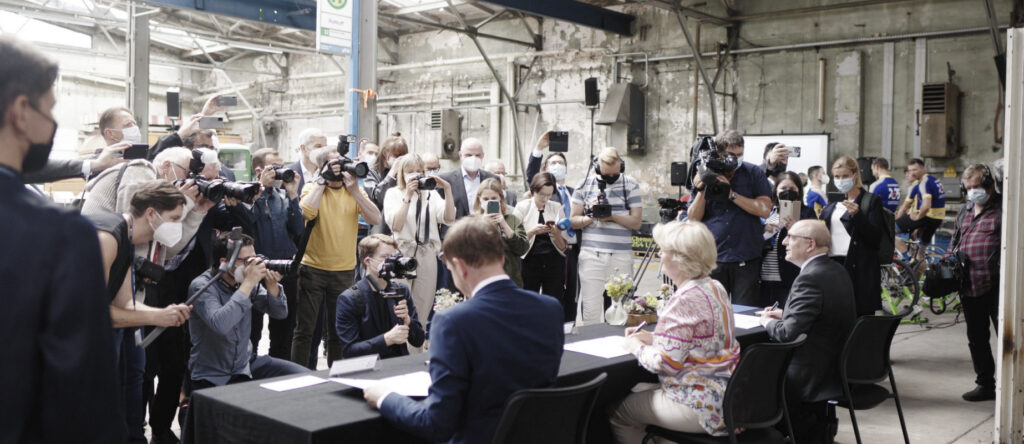
moving big
The Garage Campus will take up the historical significance, the surroundings and the conditions of the site and develop it into a long-term, meaningful and multifaceted cultural venue for the neighborhood, the city, the region and Europe. The campus creates space for experiences and encounters, becomes a place of learning and joint creation. Its central motif is to enable movement, both literally and figuratively, and at the same time to move itself. Ideas, research, innovations and progress are movement. So are production, trade and economic cycles. Nutrition is movement. Urban development is movement. Participation is movement, as is networking, exchange and togetherness. It is inherent in just about everything and therefore a constant driver for a place of movement. The Garage Campus is always open – 24 hours, 7 days a week. Always in operation, the depot becomes a movement area for body and mind.
the Garage Campus manifest
Value scenarios
In order to put the immense potential of the Garage Campus to a permanent and sustainable use, a number of mutually complementary and beneficial use scenarios are to be established. The development of the site should take into account the history of the area and the city and region of Chemnitz, while at the same time paving the way for a fundamentally new and sustainable interpretation.
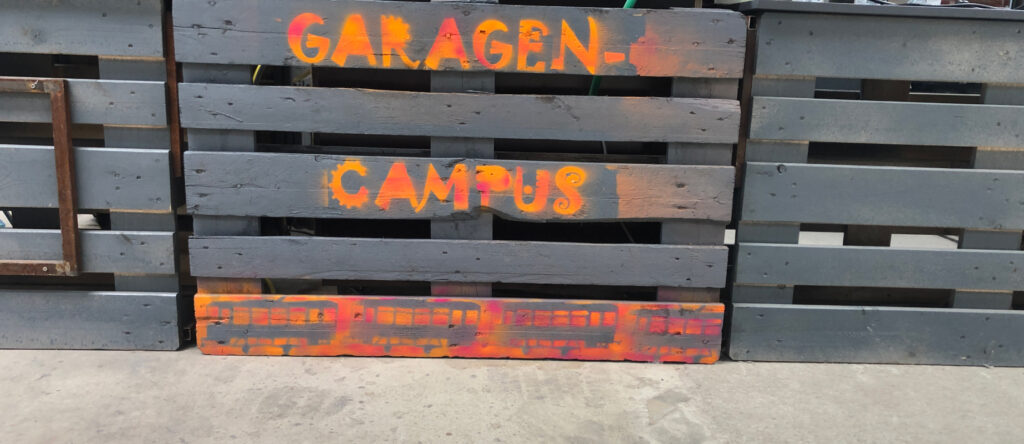
Architectural vision
The overall project Garage Campus is a long-term infrastructure project with an urban planning horizon of about a decade. The area of the Garage Campus with its existing buildings is to be structurally renewed and further developed. The framework for this is an architectural vision that will make a significant contribution to making the campus an intervention area for the European Capital of Culture 2025 and, far beyond, a showcase project with European appeal.
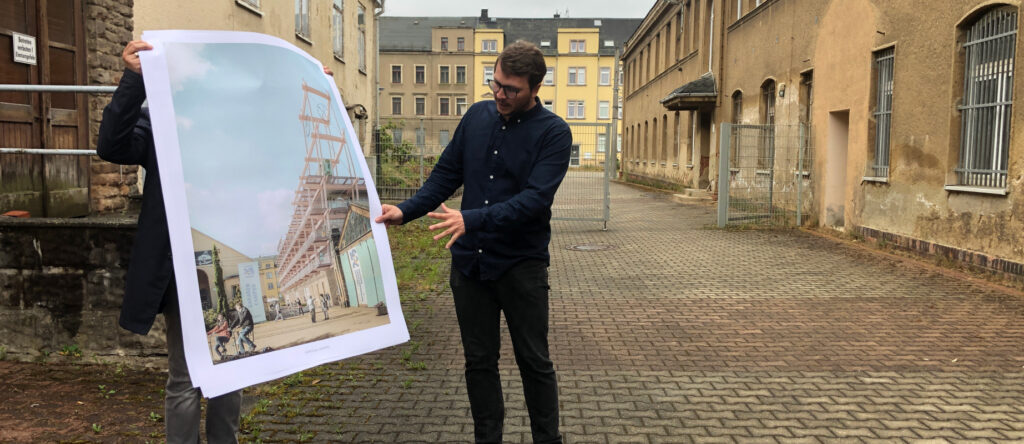
my garage
Submit your view of the garages and help shape the garage campus.